Hydrogen Storage Tanks
Hydrogen storage tanks are an issue for H2 cars. Unlike gasoline tanks, hydrogen storage tanks need to be pressurized, perhaps cooled and contained with special materials. Hydrogen storage tanks come in three popular kinds: compressed hydrogen, liquid hydrogen and metal hydride tanks.
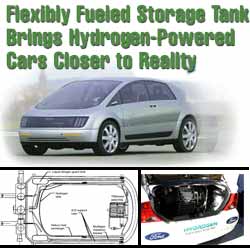 |
Compressed hydrogen storage tanks are the most popular now since they don’t require the super-cooling and super-insulation that liquid hydrogen does.
|
Compressing hydrogen fuel into storage tanks does represent its own unique challenges though. Unlike pressurizing natural gas, hydrogen is less dense and requires better seals. In addition, hydrogen storage tanks need to be made from lighter materials such as aluminum or carbon / graphite compounds.
Storing liquid hydrogen in automobile tanks takes special handling and materials to contain and keep the fuel cool. Hydrogen does not liquefy until -253°C (20 degrees above absolute zero) such much energy must be employed to achieve such temperatures.
Approximately 30 to 40-percent of the energy content of hydrogen can be lost due to the storage methods. Safety becomes an issue with the handling of liquid hydrogen as does the car’s tank integrity, when storing, pressurizing and cooling the element to such extreme temperatures.
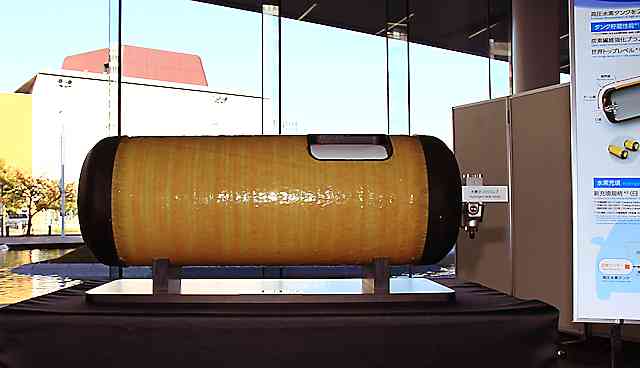
Toyota Mirai Hydrogen Fuel Tank on Display (It’s even safe from bullet fire)
Metal hydride tanks are perhaps the future for hydrogen storage for H2 cars. Metal hydrides are specific metallic compounds and alloys that act like a sponge to both absorb and release hydrogen at consistent pressures.
The life of a metal hydride storage tank is directly related to the purity of the hydrogen that is absorbed. As the metallic alloys sponge up hydrogen they also sponge up impurities as well, that will eventually clog up the tank.
|
Currently, metal hydride storage tanks are being developed for the heating and cooling systems of automobiles and advanced batteries for hybrid electrical vehicles but show much future promise for conventional gas storage as well. |
 Metal Hydride Storage |
September 15, 2005. Toyota Motor Corporation will work with the Savannah River National Lab to develop hydrogen fuel storage systems for cars, lab officials said Thursday. The automaker is putting $2 million into the project during the next two years through its Toyota Technical Center USA subsidiary.
Currently, there is no one standard hydrogen storage tank for H2 vehicles as manufacturers are competing to champion their own standards in this emerging market. In the months and years to come, however, as hydrogen technology starts to mature in the automotive industry, hydrogen storage and the particular tanks for this storage will start to standardize.
More Information From Our Blog
Written by Hydro Kevin Kantola