Ford Model U
The Ford Model U is the new Model T, at least according to the automaker. First introduced in 2003, the Ford Model U is an SUV that burns hydrogen in its supercharged internal combustion engine.
|
The Model U uses a 2.3-liter, I-4 engine, the same as the Ford Ranger of that year, only modified to run on hydrogen gas.
|
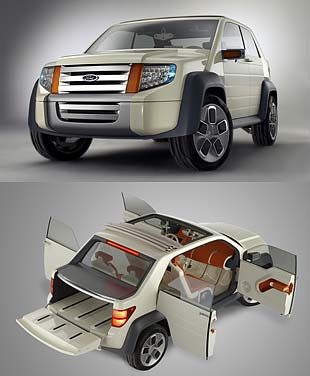 |
The engine is supercharged and super-cooled and rated at 151 hp. The Ford Model U is able to achieve gas mileage of 45 MPGe (miles per gallon equivalent) and has a range of 300 miles.
When Ford introduced the Model U, it stated that the SUV was 25-percent more efficient than the typical gasoline-powered engine. Ford didn’t go it alone in building the Model U, however as it partnered with many other companies to make this vehicle happen.
For instance, the Ford Model U hydrogen tanks are from Dynatek, the hydrogen-optimized fuel injectors from Quantum and the software and electronics programming is from no other than Sun Microsystems.
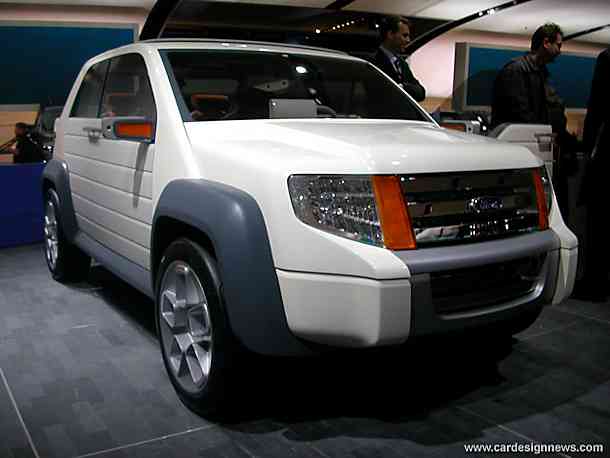
But, the Ford Model U stands for “unique” and with good reason. Besides the high-tech hydrogen technology, the Ford Model U utilizes eco-friendly materials and processes to manufacture many of the components for the vehicle.
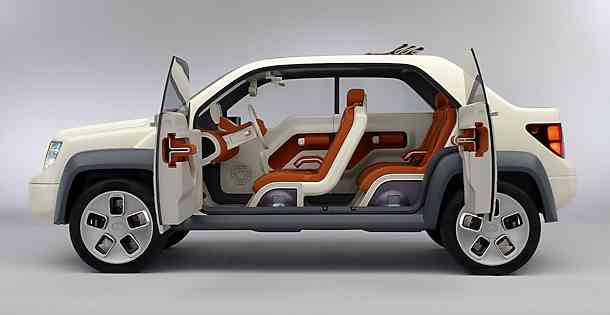
As an example, the Goodyear tires are corn-based creations. In addition, the canvas roof and carpet mats are also based upon corn biopolymers.
But, as corny as this vehicle is, there is perhaps more soy to be found in the Ford Model U. The tailgate and side panels are made from soy-based resins. Soy is also the secret ingredient in the foam for the seats. And, the University of Northern Iowa, whom one may associate with corn, actually came up with a soy-based grease for the vehicle and Shell Global produced the vehicles’ oil from sunflower seeds.
While many manufacturers talk about coming out with green cars, the Ford Model U is so green that its at least partially edible. The utterly delectable Ford Model U, like the Model T many years before it was also built for assembly line production.
The only thing Ford will need to worry about, however is the line workers grazing upon the components. Part of the cradle-to-cradle process that Ford adapted to manufacture components for the Model U uses a polylactide or PLA that is actually a nutrient to the soil.
So, no longer will cars sit in landfills for years without ever degrading, but they will become part of the Earth and actually nourish it along the way. And, this nourishment will of course grow more corn, soybeans and sunflowers in which to manufacture more Ford Model U’s. Now, this is quite a cycle, now isn’t it?
Written by Hydro Kevin Kantola