Chevy Volt Hydrogen
On April 19, 2007, GM unveiled it Chevy Volt Hydrogen concept automobile at the Shanghai Auto Show in China.
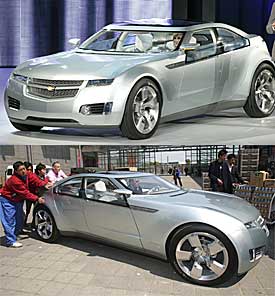 Chevy Volt Hydrogen |
The Chevy Volt Hydrogen is an E-Flex plug-in hybrid electric vehicle based upon the gasoline hybrid electric Volt concept in showrooms as of 2009 plus hydrogen technology newer than that used in the GM Sequel Concept. |
The Chevy Volt Hydrogen uses GM’s fifth generation fuel cell coupled with leading edge lithium-ion battery technology. Because current lithium-ion battery packs are large and prohibitively expensive, GM has partnered with four outside battery companies and increased its internal staff to aid in the research of development of such batteries.
GM’s fifth generation fuel cell used in the Chevy Volt Hydrogen is one-half the size of previous fuel cells, yet providing the same power and performance. Wheel hub motors, which are third generation, provide power and torque in this all-wheel-drive vehicle.

Aside from the Chevy Volt Hydrogen, GM’s most recent hydrogen vehicle is the Sequel Concept, which uses a fourth generation fuel cell that is twice as large and delivers half the fuel mileage (38 MPGe as compared to the Chevy Volt Hydrogen at 75 MPGe). The Volt Hydrogen also weighs 30-percent less than the Sequel Concept and uses such weight reduction items as plastic panels on the fenders, instrument panels and steering wheel.
The Chevy Volt Hydrogen has a range of 300 miles at can be plugged into a normal wall 110 volt wall outlet for six hours in order to recharge the battery pack. The Chevy Volt Hydrogen is capable of traveling 40 miles on electric only, saving fuel. The standard Chevy Volt plug-in hybrid electric gasoline vehicle was first introduced to the public in January 2007 at the North American International Auto Show in Detroit.
By developing the Chevy Volt Hydrogen as an E-Flex vehicle, it gives GM a wide range of choices and flexibility when it comes to which types of propulsion system can be swapped out to power the vehicle including hydrogen, gasoline, ethanol, biodiesel or many other configurations going forward.
Because General Motors didn’t know, which type of alternative fuel vehicle would eventually become the frontrunner, elbowing the others out, it decided to built a plug-in hybrid that could accept many different types of power train companions.
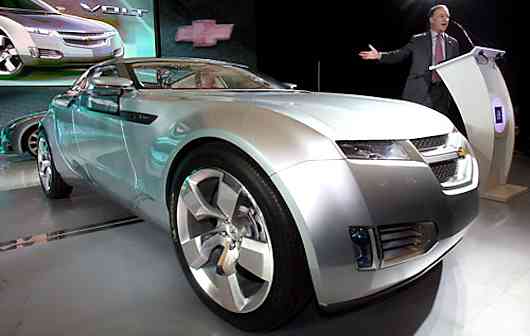
Though GM may be a few months behind Ford in debuting a plug-in electric hybrid electric hydrogen vehicle, it also has an eye to the future as far as keeping its options open with the new E-Flex technology. So, for instance, if ethanol vehicles are hot for a few years before hydrogen vehicles catch on, GM will be well positioned to take advantage of both buyer trends, while offering reduced emissions and dependency upon gasoline.