Liquid Hydrogen Fuel
Liquid hydrogen is the fuel of choice for some hydrogen car and vehicle manufacturers. Hydrogen vehicles such as buses require longer range capabilities and longer hours of operation than other vehicles and liquid hydrogen fuel meets these requirements.
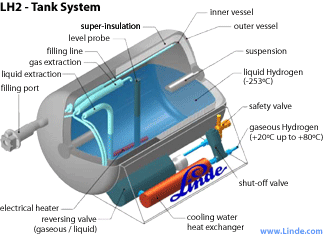 |
Even though liquid hydrogen tanks can store more in a given volume than compressed hydrogen tanks and liquid hydrogen carries more energy density than gaseous hydrogen, there are some downsides to using liquid hydrogen to power large vehicles.
|
Issues with hydrogen boil-off, liquefaction, weight, volume and tank cost need to be addressed for economical use of liquid hydrogen. Safety concerns are also more of an issue with hydrogen that is in a liquid state.
Liquid hydrogen fuel has a high-flammability range to special handling, methods of storage and transport need to be strictly adhered to in order to avoid critical accidents. Elimination of sparks from electrical equipment, static electricity, open flames or extremely hot objects need to be employed to insure one’s safety. These safety measures for dealing with liquid hydrogen will not only have to take place inside the inner workings of the hydrogen vehicle, but in the fueling stations, transport vehicles and other parts of manufacturing and distribution as well.
BMW has a production ready Mini vehicle powered by liquid hydrogen, called the BMW Mini Hydrogen rolled out in 2001. In 1999, the BMW 750hl was introduced as the first liquid hydrogen powered car. The BMW 750hl was powered by a 12-cylinder combustion engine with two independent fuel induction systems, which are electronically controlled to run off of either gasoline or liquid hydrogen fuel tanks.

BMW Hydrogen 7
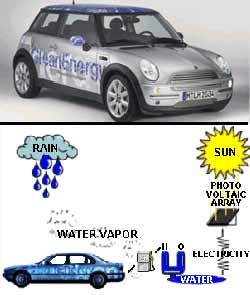
The BMW 750hl also contains a solar-powered voltaic array which generates electricity to split water into hydrogen and oxygen. The oxygen is released into the atmosphere and the hydrogen is liquefied and stored at extremely low temperatures (-253 °C). During the internal combustion phase, the hydrogen combines with oxygen to power the vehicle and water is released as steam.
Another exciting development in liquid hydrogen fuel technology is the world’s first Unmanned Aerial Vehicle (UAV) powered by cryogenic liquid hydrogen has completed flight tests. California-based AeroVironment developed the UAV for purposes such as hurricane tracking from heights such as 65,000 – 98,000 feet above sea level. The unmanned plane can stay in the air for approximately 24-hours before it needs refueling.
This kind of cryogenic liquid hydrogen fuel technology could eventually lead to breakthroughs in the airline industry, future reducing dependence upon foreign oil and greenhouse gases. Besides land vehicles, airplanes produce the second most amount of greenhouse gases in the U. S. Having hydrogen-powered land vehicles and airplanes will not only lead to hydrogen highways but hydrogen skyways as well.
Written by Hydro Kevin Kantola