Japan’s Hydrogen Highway
Japan’s hydrogen highway system was brought into place because of the 4-year Japan Hydrogen & Fuel Cell Project (JHFC). Twelve hydrogen fueling stations have been built in 11 cities in Japan.
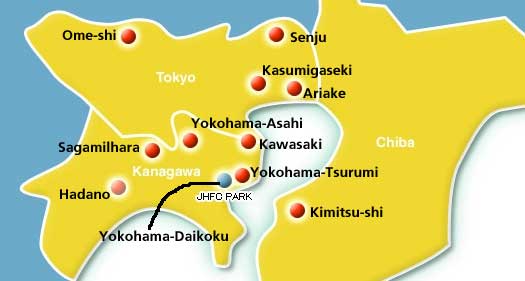 Japan’s Hydrogen Highway |
Two hydrogen fueling stations that were built for Expo 2005 in Seto-North and Seto-South have been moved to the Chubu International Airport where only one is in operation now. Eight Toyota / Hino FCHV buses were refueled at these stations for the World Exposition Fair of 2005. The stations dispensed 1,300 kg of hydrogen gas during the Expo.
One hydrogen fueling station that had been operational in the city of Hadano in the Kanagawa Prefecture was the world’s first station to dispense hydrogen made by reforming kerosene. The station built by the Idemitsu Kosan Company required extensive desulfurization technology.
The other Japanese cities that currently have operational hydrogen fueling stations include Ome-shi, Senju, Kasumigaseki, Ariake, Sagamilhara, Yokohama-Asahi, Kawasaki, Yokohama-Tsurumi, Yokohama-Daikoku and Kimitsu-shi.
The Ome-shi hydrogen station operates by reforming natural gas, which is readily available. The Ome-shi station is also a mobile station and services areas not covered by the fixed hydrogen stations. The Senju station is an LPG reforming station run by Tokyo Gas and Nippon Sanso.
The Kasumigaseki hydrogen fueling station is a mobile station located near Tokyo. The components of this hydrogen refueling station are brought inside and night and moved outside for use in the morning hours. The Ariake hydrogen refueling station is equipped to dispense both gaseous and liquid hydrogen. This is one of only two stations capable of dispensing liquid hydrogen in Japan.
The Sagamilhara hydrogen fueling station was the first of its kind installed at an existing LP gas station. The station uses alkali diaphragm water electrolysis to generate hydrogen gas. The Yokohama-Asahi hydrogen fueling station is the first station in Japan to reform high-purity hydrogen from naphtha.
The Kawasaki hydrogen fueling station is the world’s first station to reform methanol in order to attain the hydrogen gas. Methanol reforming is safer than natural gas reforming in that it can be done at lower temperatures with less energy expended.
The Yokohama-Tsurumi hydrogen fueling station is Japan’s first off-site station that refuels fuel cell vehicles through a trailer. The Yokohama-Daikoku hydrogen station uses steam reforming of de-sulfurized gasoline to produce hydrogen. Behind the station is a showroom and garage for hydrogen fuel cell vehicles.
The Kimitsu-shi hydrogen station uses coke oven gas (COG) to mass-produce liquid hydrogen. The by-product COG is produced in the steel-making process and everyday this facility manufactures 0.2 tons of high-purity liquid hydrogen.
More Info From Our Blog