Hydrogen Fuel Cars 2006 – 2007
This is the first section of a historical list of hydrogen cars down through the years. Hydrogen cars have been around since 1807 and so we present to you in chronological order the hydrogen cars and vehicles that have appeared before the public eye for the past 200-plus years.
2006 – 2007
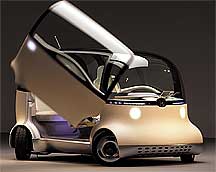 |
The Honda Puyo was first unveiled at the 2007 Tokyo Motor Show. The Honda Puyo has a soft outer body shell and is designed to give the driver the feeling of friendliness in the same vein as owning an iDog would. One of the most exciting features of this vehicle is that it can turn 360 degrees and never needs to go into reverse. | |
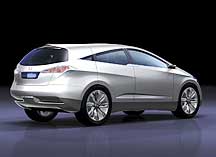 |
2007 Hyundai I-Blue uses the 4th generation fuel cell and was build from the ground up and not on an SUV frame like the earlier Tucson was. | |
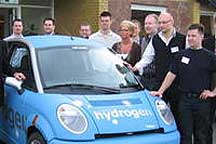 |
2007 Hywet was a fuel cell hybrid car developed in Denmark that could go 50 mph and had a range of 100 miles. The Hywet, with its 13 kw electric motor and $37,000 price tag was the first commercial hydrogen car offered to the public for sale in the world. | |
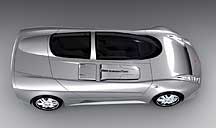 |
Giugiaro Vadho was unveiled at the 2007 Geneva Motor Show. The Italian-designed vehicle is powered by the same BMW V-12 engine as the BMW Hydrogen 7 luxury automobile unveiled in 2006. Operated by joysticks on drive-by-wire technology, the Giugiaro Vadho is one of the most science fiction looking hydrogen vehicles to date. | |
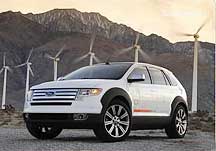 |
The Ford Edge with HySeries Drive was unveiled at the 2007 Washington D. C. Auto Show. The Ford Edge with HySeries Drive is nothing like the standard Ford Edge in that the HySeries Drive vehicle is also a plug-in electric hybrid as well as a hydrogen vehicle. Ford’s CEO Alan Mulally also had to apologize to President Bush, when Mulally cracked a bad joke concerning the Ford Edge with HySeries Drive to the media. | |
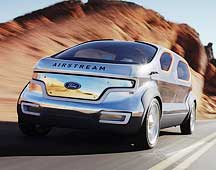 |
The Ford Airstream uses the same HySeries Driver powertrain as the Ford Edge mentioned above, but also combines the iconic look of an Airstream motor home and futuristic interior. The Ford Airstream was unveiled at the 2007 North American International Auto Show in Detroit. | |
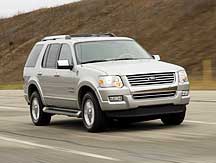 |
The Ford Explorer hydrogen SUV was first shown at the 2006 Los Angeles International Auto Show in December. The Ford Explorer hydrogen vehicle is also a hybrid vehicle that uses a 60 kw PEM fuel cell and two 65 kw electric motors. | |
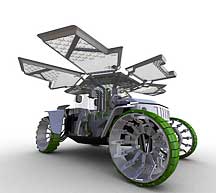 |
The GM Hummer O2 is a computer design that won the Los Angeles Auto Show Design Challenge in 2006. The GM Hummer 02 was conceptualized by the General Motors West Coast Advanced Design Studio to meet the auto show’s theme of environmental sustainability. The outer body of the GM Hummer O2 is encased in algae to provide oxygen to the planet, making it a very green computer concept. | |
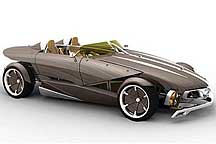 |
The Acura FCX 2020 Le Mans or NHR-1 (Nano Hydrogen Racer 1) is a computerized concept vehicle designed by Joe DeNatale and David Cheng and Leon Paz. The Acura FCX 2020 Le Mans is conceived to be made from 100-percent recyclable materials and may one day race at the world’s most grueling endurance race. | |
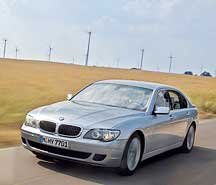 |
The BMW Hydrogen 7 luxury automobile was shown in October 2006 and uses the same V-12 engine as the Giugiarò Vadho unveiled in 2007. The BMW Hydrogen 7 is a dual-fuel vehicle able to use either liquid hydrogen or gasoline in its internal combustion engine. | |
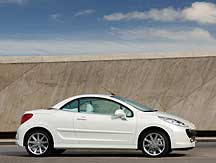 |
The Peugeot 207 Epure in the first hydrogen fuel cell powered convertible sports car running off a GENEPAC PEM fuel cell and lithium-ion batteries. The Peugeot 207 Epure was built as a joint project between Peugeot, Citroen and the French Atomic Energy Commission. | |
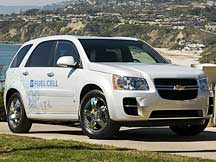 |
The GM Chevy Equinox Fuel Cell was first shown in 2006 at the Camp Pendleton Marine base between San Diego and Orange County. The GM Chevy Equinox is a hybrid electric hydrogen vehicle that runs on PEM fuel cells and 10,000 psi compressed gas tanks. | |
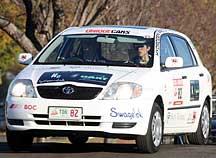 |
The UTAS H2-Diesel is a modified Toyota Corolla developed by the University of Tasmania. The UTAS H2-Diesel injects a mixture of both hydrogen and diesel, generating 20-percent more power than diesel alone, while cutting emissions. | |
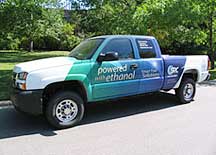 |
The SRC Hydrogen Truck was a project developed by the Saskatchewan Research Council that actually modified two GM pickup trucks to run on either hydrogen-diesel blends or hydrogen-gasoline blends. The 2004 SRC truck ran on a 60-percent hydrogen, 40-percent diesel blend and used a GM 6.6 liter engine. The 2005 SRC Hydrogen truck used a hydrogen-gasoline blend that could at times run on 100-percent hydrogen in a 6.0 liter engine. | |
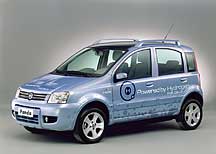 |
The next generation Fiat Panda Hydrogen was unveiled in 2006 and uses the Nuvera Andromeda II fuel cell stack. The hydrogen tank and fuel cell in the Fiat Panda are located in sandwich style underneath the floor panel for increase interior leg room. | |
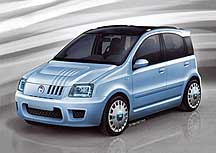 |
The Fiat Panda MultiEco is a lightweight version of the Fiat Panda. The Fiat Panda MultiEco is powered by internal combustion engine running off either gasoline or CNG and in the near future, it is said that hydrogen will be added to the mix. | |
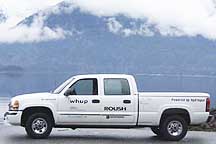 |
The eTec-Roush Hydrogen Silverado truck is a modified GMC vehicle that uses an internal combustion engine to burn hydrogen (HICE). The eTec-Roush Hydrogen Silverado truck uses a Vortec 6.0 Liter V8 engine with electronic fuel injection to burn compressed hydrogen. | |
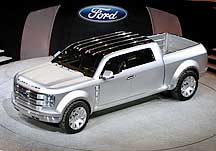 |
The Ford Super Chief is the first tri-fuel vehicle that can run off either gasoline, ethanol or hydrogen. The Ford Super Chief debuted at the Detroit Auto Show in 2006 and the design is said to be inspired by the early locomotive industry. | |
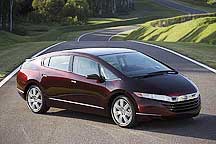 |
The 2006 Honda FCX has made several distinct improvements over the 2005 model. The Vertical gas flow system and the use of three electric motors in the 2006 Honda FCX give the vehicle more power and more cold cranking abilities than the older model. | |
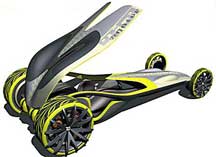 |
The Hyundai Greenspeed Gator is a computerized concept car shown at the 2006 L. A. Auto Show. The reptilian design is supposed to be the future of drag racing complete with hydrogen fuel cells for zero emissions on the drag strip. | |
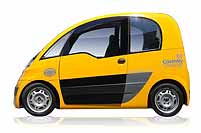 |
The hydrogen fuel cell Microcab shows itself in London, England as it makes its debut at the 10th Grove Fuel Cell Symposium. The Microcab will carry tourists and others around the Birmingham area and is powered by an Intelligent Design fuel cell. | |
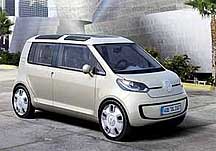 |
The VW Space Up Blue is a hydrogen concept microvan that made appearances at the 2007 auto shows in Tokyo, Frankfurt and Los Angeles. |
Navigation
1807-1986 1990-1998 1999 2000 2001 2002 2003 2004 2005
2006-2007 2008-2009 2010-2011 2012-2013 2014-2015 2016-2017
Written by Hydro Kevin Kantola