2000
Hydrogen Fuel Cars 2000
The new millennium brought in 13 interesting hydrogen cars, including three models by DaimlerChrysler. Ford and Millennium Fuel Cell also made a good showing in 2000 along with General Motors and Volkswagen who both showed off a couple of innovative hydrogen vehicles.
2000
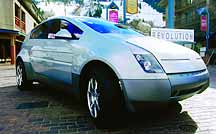 |
The 2000 Hypercar Revolution midsize SUV was manufactured by the Rocky Mountain Institute after 10 years of research and development. The Hypercar Revolution is a hybrid electric hydrogen fuel cell vehicle with a carbon fiber, thermo-plastic body providing a range of 330 miles. |
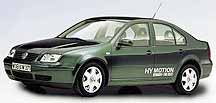 |
The 2000 Volkswagen Bora HyMotion (Jetta) is a fuel cell vehicle running off liquid hydrogen. The VW Bora HyMotion uses a 75 kw asynchronous electric motor to reach a top speed of 90 mph while providing a range of 220 miles. |
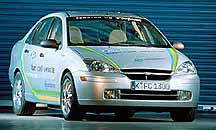 |
The 2000 Ford Th!nk FC5 FCV is an FCV developed by Th!nk, which is based on a Ford Focus and powered by a Ballard 900 series 85 kw fuel cell with a top speed of 80 mph. The Ford Think FC5 FCV was introduced by the manufacturer at the SEMA show in Las Vegas and used liquid methanol plus an onboard reformer to extract the hydrogen to power the vehicle. |
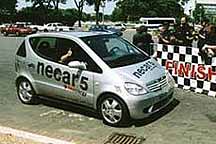 |
The 2000 DaimlerChrysler Necar 5 is also based on the Mercedes-Benz A-Class and was unveiled in November of that year. Unlike the Necar 4, the DaimlerChrysler Necar 5 uses hydrogenous methanol with an onboard reformer that extracts the hydrogen to run through the Ballard fuel cell to power the vehicle and achieve speeds of up to 90 mph. |
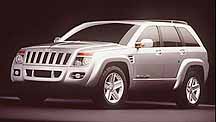 |
The 2000 DaimlerChrysler Jeep Commander 2 is a luxury hybrid SUV powered by fuel cell and two electric motors. The 4WD Jeep Commander 2 uses a tank filled with methanol and an onboard reformer to extract the hydrogen to power the vehicle. The Jeep Commander 2 also uses thermoplastic molding technology. |
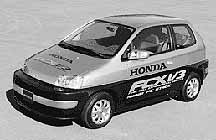 |
The 2000 Honda FCX-V3 is a hybrid fuel cell vehicle that was introduced in September that year in Tokyo. The Honda FCX-V3 is powered by a 62 kw fuel cell stack (either Ballard or Honda), electric motor and newly designed ultracapacitors. |
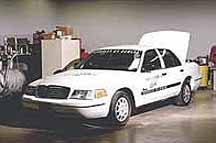 |
The 2000 Millenium Cell Ford Crown Victoria H2 uses the companies patented hydrogen-on-demand system to create hydrogen as needed to propel the vehicle. Instead of gaseous or liquid hydrogen, the Millenium Cell Ford Crown Victoria H2 uses the hydrogen-rich chemical compound sodium borohydride to store the H2 until needed and then it is run through the car’s internal combustion engine. |
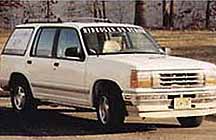 |
The 2000 Millenium Cell Ford Explorer SUV is a modified sport utility vehicle using as sodium borohydride hydrogen-on-demand system to propel the vehicle. The Millenium Cell Ford Explorer SUV uses a reservoir of sodium borohydride solution, a receiving tank and a reaction chamber to create hydrogen to power the vehicle. In 2002, Millenium Cell won an award from Popular Science for this technology. |
 |
The 2000 Peugeot Citroen PSA Hydro-Gen was a joint venture between the automaker and several partners. The Peugeot Citroen PSA Hydro-Gen was a hybrid electric hydrogen fuel cell vehicle using a Nuvera 30 kw fuel cell stack with a range of approximately 180 miles. |
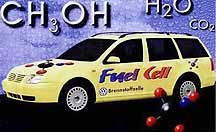 |
The 2000 Volkswagen Capri is a Golf variant that was the result of 5 years of research beginning in 1996. The Volkswagen Capri used a Ballard PEM fuel cell and was fueled with methanol that ran through a reformer to produce hydrogen for the fuel cell. |
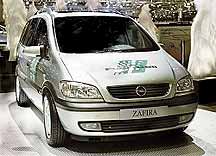 |
The 2000 GM Opel Zafira HydroGen 1 minivan was powered by an 80 kw PEM fuel cell with a range of 250 miles. The GM Opel Zafira HydroGen 1 hybrid has a top speed of 90 mph and is powered by liquid hydrogen. |
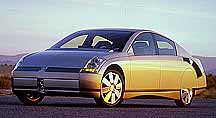 |
The 2000 GM Precept FCEV was unveiled in January that year at the Detroit Auto Show. The GM Precept FCEV hybrid used a 100 kw fuel cell and was able to achieve 108 miles per gallon equivalent (MPGe) partly do to its lightweight aluminum body. |
 |
The 2000 Hyundai Santa Fe FCEV was unveiled in the year 2000. This was Hyundai’s first generation fuel cell vehicle. This SUV was tested at the California Fuel Cell Partnership (CaFCP) in Sacramento, California. |
Navigation
1807-1986 1990-1998 1999 2000 2001 2002 2003 2004 2005
2006-2007 2008-2009 2010-2011 2012-2013 2014-2015 2016-2017
Written by Hydro Kevin Kantola
Leave a Reply
You must be logged in to post a comment.