Hydrogen Fuel Cars 1807 – 1986
Between 1807 and 1986 was a time of great development for hydrogen cars. From the first Rivaz car designed by Francois Isaac de Rivaz of Switzerland to the Hippomobile to the GM Electrovan to several models designed by Musashi, hydrogen vehicles grew by leaps and bounds over these years. Between 1987-1989, there were no known hydrogen cars on display.
1986
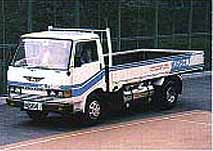 |
In 1986, the Musashi 7 was exhibited a the Vancouver Transportation EXPO. The Musashi 7 is a small truck with a four-stroke turbocharged engine that uses liquid hydrogen for propulsion. | |
| 1984 | ||
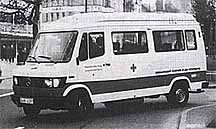 |
In 1984, the Mercedes Daimler Benz TN 310 Van was demonstrated in Berlin, Germany. The 10-passenger Mercedes Daimler Benz TN 310 Van uses an internal combustion engine with compressed hydrogen to deliver 75 kw at 5600 rpm. The TN 310 also uses metal hydride storage. | |
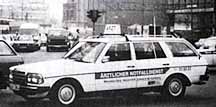 |
In 1984, the Mercedes 280 TE was demonstrated by Daimler-Benz, Aral, Dornier, Mannesmann. The Mercedes 280 TE was a dual-fuel vehicle capable of running on either gasoline or compressed hydrogen gas in its internal combustion engine. The Mercedes 280 TE was capable of delivering 120 kw at 5500 rpm. | |
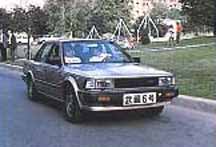 |
In 1984, the Musashi 6 was exhibited at the WHEC 5. The Musashi 6 is a small passenger car with a four-stroke turbocharged engine that runs on liquid hydrogen. In addition, the Musashi 6 uses in-cylinder injection and hot surface ignition. | |
| 1982 | ||
 |
In 1982, the Musashi 5 is a white, two-door passenger car with a two-stroke engine that uses liquid hydrogen for propulsion. The Musashi 5 uses in-cylinder injection and was first exhibited at the WHEC 4. | |
| 1980 | ||
 |
In 1980, the Musashi 4 is a blue passenger car with a 2-stroke engine that uses liquid hydrogen for propulsion. The Musashi 4 uses in-cylinder injection and was first exhibited at WHEC 3. | |
| 1979 | ||
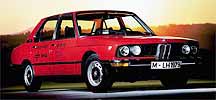 |
In 1979, the BMW 520h is a four-door passenger dual fuel vehicle that can run on either gasoline or liquid hydrogen. The BMW 520h used super-insulated cryogenic tanks for the hydrogen and was equipped with a 3.5-liter direct injection engine. | |
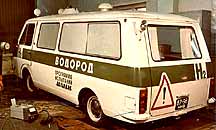 |
In 1979, Russia unveiled its Kvant-RAF (Riga Bus Plant) H2 van that contained a 12 kw alkaline fuel cell and ran on hydrogen. Because of intense political upheaval at this time in Russia, the Kvant-RAF H2 van was never further developed. | |
| 1978 | ||
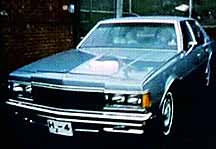 |
In 1978, the H2-4 Chevy was presented to Jack Nicholson on a CBS special news report. The H2-4 Chevy used an modified internal combustion engine to run on hydrogen gas. Nicholson sniffed the tailpipe of the H2-4 Chevy and fogged his glasses to show how clean-burning this vehicle was emitting only steam. | |
| 1977 | ||
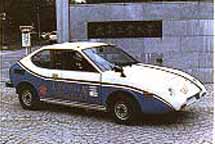 |
In 1977, the Musashi 3 is a two-door passenger car with as scoop hood that uses a two-stroke engine and liquid hydrogen for propulsion. The Musashi 3 uses spark ignition and in-cylinder injection. | |
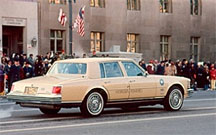 |
In 1977, Roger Billings designed a hydrogen-powered Cadillac Seville, which ran in President Jimmy Carter’s inaugural parade. The Seville was a dual fuel vehicle able to use either hydrogen or gasoline to extend the range of the automobile. The hydrogen Cadillac was also equipped with a state of the art metal hydride tank. | |
| 1976 | ||
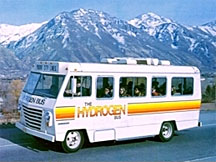 |
In 1976, Roger Billings Provo-Orem bus demonstrated the power of metal hydride storage of hydrogen. The 21-passenger public transit bus made a 13-mile run in Utah, proving the vehicle could handle the higher weights of the storage vessels and that even in stop and go driving conditions the vehicle was 80-percent more efficient that gasoline-powered vehicles. | |
| 1975 | ||
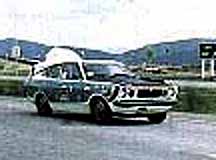 |
In 1975, the Musashi 2 was a passenger car that ran in the SEED Rally in the USA. The Musashi 2 used a four-stroke engine with manifold injection and ran on liquid hydrogen for propulsion. | |
| 1974 | ||
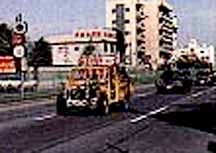 |
In 1974, the Musashi 1 was unveiled as the first Japanese hydrogen-fueled vehicle. Created by the Musashi Institute of Technology in Tokyo, the Musashi 1 used a 4-stroke engine with homogeneous charge and high pressure hydrogen to power the vehicle. | |
| 1972 | ||
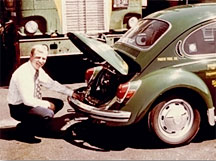 |
In 1972, the Brigham Young Superbeetle, developed by Roger Billings team, won first place for emissions in the Urban Vehicle Design Competition in Ann Arbor, Michigan. Using the water induction method to reduce nitric oxide the hydrogen-powered Volkswagen actually cleaned the ambient air and was given a negative number for unburned hydrocarbons and carbon monoxide. | |
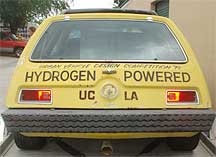 |
The 1972 Gremlin was developed by faculty and students as UCLA in Los Angeles. The vehicle carried a 351 cubin inch Ford Boss engine and had zero tailpipe emissions. This vehicle has also made the claim to winning the 1972 Urban Vehicle Design Competition as did the Roger Billings vehicle pictured above. | |
| 1970 | ||
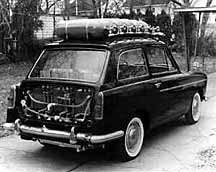 |
In 1970, the K. Kordesch passenger car was built by Karl Kordesch and was based upon an Austin A 40. The K. Kordesch was a fuel cell hybrid car using seven lead acid batteries and a 6 kw Union Carbide alkaline fuel cell powered by hydrogen gas. Compressed hydrogen gas was contained in six tanks strapped to the top of the car and the K. Kordesch ran on public roads for three years. The total power output for the K. Kordesch was 150 kw making it comparable to other cars on the road at that time. | |
| 1967 | ||
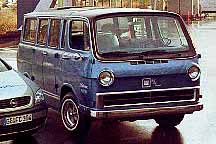 |
The 1966 General Motors Electrovan is the first hydrogen fuel cell car of record. The GM Electrovan was based on the 1966 GMC Handivan and carried all of the fuel cell parts and hydrogen storage tanks in the back of the van. The 1966 GM Electrovan was powered by a 5 kw Union Carbide fuel cell and the vehicle had a range of 120 miles, though it was only driven on company property. | |
| 1966 | ||
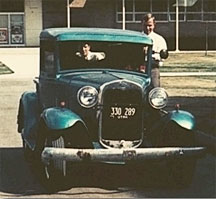 |
In 1966, Roger Billings used a Model A Ford donated by his father and converted it to run on hydrogen. Two compressed hydrogen cylinders where in the back of the vehicle and since the vehicle’s engine had an L-shaped head, backfiring was not a problem. Billings used the Model A as part of a high school science fair project. | |
| 1959 | ||
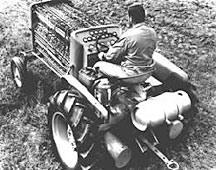 |
The 1959 Allis-Chalmers farm tractor, developed by Harry Karl Ihrig was demonstrated in Milwaukee as the first fuel cell vehicle in history. The tractor contained 1,008 small alkaline fuel cells that provided 15 kw of energy, enough to help the tractor pull 3,000 lbs. in demonstrations. The Allis-Chalmers fuel cell tractor is now in the Smithsonian Institute. | |
| 1941 | ||
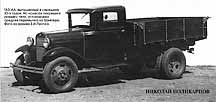 |
The 1941 GAZ-AA truck was created out of necessity by Mr. Boris Shelishch. During WWII, the Nazis had surrounded Leningrad, Russia and cut off supplies. Petroleum was running low. So, military technician Boris Shelishch stepped in an converted a GAZ-AA truck to run on hydrogen gas. After receiving orders from top commanders, Boris Shelishch and his crew were able to convert 200 GAZ-AA trucks in 10 days to run on hydrogen and demonstrated that they burned cleaner and longer than those that had run on petrol | |
| 1933 | ||
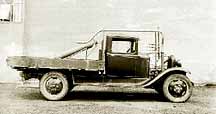 |
In 1933, the Norsk Hydro power company converted one of their small trucks to run on hydrogen gas. The Norsk Hydro truck contained an onboard ammonia reformer to extract hydrogen and run it through its internal combustion engine. | |
| 1860 | ||
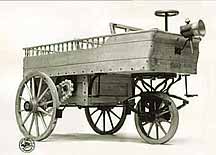 |
In 1860, Etienne Lenoir of France invented the 1-cylinder, 2-stroke Hippomobile. The Lenoir Hippomobile was so named because it received its fuel by electrolyzing water and running the hydrogen through the small horizontal engine. The Hippomobile engine ran on “natural cycles” with an uptake of fuel mixture and a down stroke combusting the exhausted fuel.Later, Lenoir adapted the engine for various gases such as coal gas. Around 350-400 of the Lenoir gas motors were built and sold. | |
| 1807 | ||
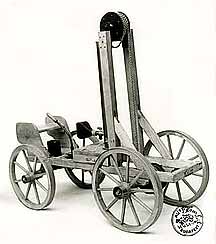 |
In 1807 Francois Isaac de Rivaz of Switzerland designed the first internal combustion engine that ran inside the first automobile. This first experimental prototype was powered by hydrogen gas and oxygen. The Rivaz car stored compressed hydrogen gas in a balloon and it had an electrical Volta cell ignition. |
Navigation
1807-1986 1990-1998 1999 2000 2001 2002 2003 2004 2005
2006-2007 2008-2009 2010-2011 2012-2013 2014-2015 2016-2017
Written by Hydro Kevin Kantola