H2 Production
Hydrogen Production
Hydrogen production will be necessary for the hydrogen highway to take off. For hydrogen cars to be produced on a large scale, hydrogen production must be in place in order to meet this need. While hydrogen itself is the most common element in the universe, it makes up only an extremely tiny percentage of air, with nitrogen and oxygen dominating the mix. Most current hydrogen production in the U. S. today is by steam reforming of methane from natural gas.
|
For the hydrogen highway to occur, though, other methods for hydrogen production must be employed in order to meet the rising needs. |
|
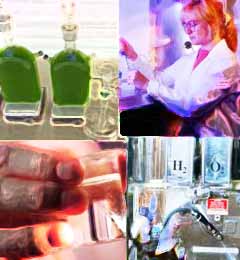
Most methods will split water into its two components of hydrogen and oxygen. Research and development into the following areas for producing hydrogen fuel must occur: photobiological water splitting, photoelectrochemical water splitting, reforming biomass, solar thermal water splitting, renewable electrolysis and wind and hydropower water splitting.
In regards to photobiological water splitting, light energy can activate certain photosynthetic microbes, producing hydrogen (and oxygen) from water. Specific purple bacteria and blue-green algae (Cyanobacteria) are being developed and that will be used in a photo-bioreactor to produce solar hydrogen. Since the U. S. Oil Crisis of 1973, many companies have been developing microalgae-based processes for hydrogen production.
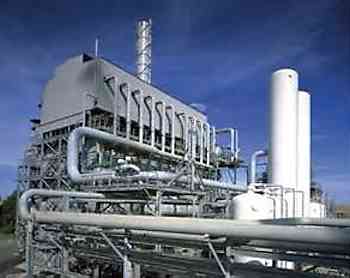
Steam Reformer
Photoelectrochemical (PEC) water splitting uses solar energy to produce hydrogen. With PEC the trick is to produce enough voltage from solar energy in order to make this reaction occur. Research into using nano-crystalline material for such a process has helped to develop a more efficient way to use solar energy in the splitting process. Low-cost a-Si tandem designs with appropriate stability and performance are also being developed.
Biomass such as agricultural residue, plastics, waste grease and plants can be used via pyrolysis or gasification to produce hydrogen. Microbes can be used to break down the biomass into hydrogen and other components. According to the U. S. Department of Energy, “Biomass pyrolysis produces a liquid product (bio-oil) that, like petroleum, contains a wide spectrum of components that can be separated into valuable chemicals and fuels.”

Hydrogenics Electrolyzer
Going Solar …
Solar thermal water splitting involves using highly concentrated sunlight to split methane into hydrogen and carbon. Concentrated solar energy can also be used to generate temperatures of several hundred to over 2,000 degrees at which thermochemical reaction cycles can be used to produce hydrogen.
Renewable electrolysis is another tangible possibility for the production of hydrogen. Using electrolysis to split water into hydrogen and oxygen has been around since the 1950’s. At that time electrolysis was used for applications requiring small volumes of high purity hydrogen or for producing oxygen such as for breathing atmospheres for submarines. Today, electrolysis is being looked at for a renewable energy resource, in that, hydrogen can be produced through electrolysis, then run through a fuel cell to produce electricity as with hydrogen cars that employ fuel cell technology.
Wind and hydropower water splitting are two more ways being looked at to produce hydrogen through electrolysis. Both of these natural energy sources are currently being used to produce electricity, which in turn could be used very easily for hydrogen production.
High-volume hydrogen production for hydrogen cars will need to be in place within the next 10 years. In addition, though, hydrogen production will also be used to power homes, businesses, heavy machinery, batteries and many other uses as well. Hydrogen production and storage is the clean energy alternative that will soon be mainstream.
More Information From Our Blog
External Links
http://www.hygear.nl/fileadmin/hygear/Leaflets/HyGear_HGS_brochure.pdf
Written by Hydro Kevin Kantola
Leave a Reply
You must be logged in to post a comment.