Hydrogen Fuel
Hydrogen fuel is also an energy carrier. In fact, many will argue that is all hydrogen fuel is. Since hydrogen does not occur on Earth in any significant amounts by itself (and this point is now up for debate and more natural hydrogen has been discovered) it must be separated from its chemical bonds such as with methane or water.
 Hydrogen Fuel |
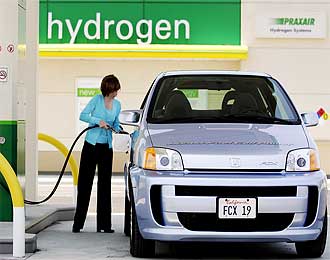
Hydrogen fuel to the laymen is what one puts in one’s car. When you drive your hydrogen car (with internal combustion engine or fuel cell) up to an H2 fueling pump, you refuel your car. The hydrogen is then “burned” in the internal combustion engine or used in fuel cell which in turn propels the vehicle and emits only a small amount of steam.
|
Hydrogen is also used as a propellant is NASA rockets and hydrogen peroxide is used as fuel in some jetpacks and racecars. Many who argue that hydrogen fuel is really an energy carrier are battery electric car enthusiasts.
What they fail to mention is that electrical batteries and capacitors, commonly found in electric cars are also energy carriers. At least to Wikipedia, an energy carrier is a “system or substance that contains energy for conversion as usable energy later or somewhere else.”
Coal, petroleum and methane are considered energy sources or fuels since the energy is already in them as they are found in nature. They don’t have to be altered into another state.
Term Limits …
But, for most people hydrogen fuel is a perfectly adequate term to describe a volatile, flammable and combustible substance that propels one’s car, trucks, motorcycle, airplane or other vehicle.
The reason many prefer hydrogen fuel cars to many other types of vehicles is the low or zero emissions. Hydrogen fuel cell cars typically give off zero emissions, while hydrogen cars with internal combustion engines give off near zero emissions.
Some criticize electric cars as not being true zero emissions vehicles since the majority of electricity in this country is generated by coal. The majority of hydrogen fuel, however, is now generated by steam reforming natural gas, which is a cleaner process than burning coal.
|
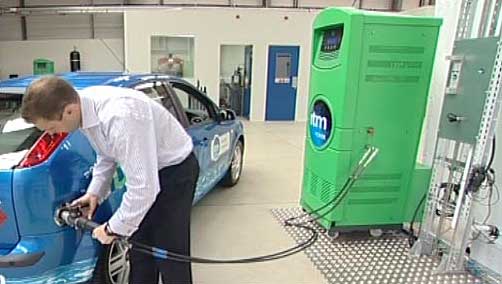
And another way to produce hydrogen fuel is through the electrolysis of water. Solar panels, wind turbines, hydro power and geothermal energy can all be used to produce hydrogen using clean renewable energy.
|
 |
There is also much research now being conducted to produce direct solar to hydrogen using nanotechnology. Other production methods involve using algae, bateria, waste water treatment plants, garbage dumps, and other chemical methods to produce H2 gas.
Presently, the United States, Germany and Japan are the leaders in producing hydrogen fuel and H2 cars. Germany is making a push with its H2 Mobility plan to quickly build a hydrogen refueling infrastructure in that country so that commercial rollout of H2 vehicles will be possible by the year 2015.
And if you would like 436 pages of additional “light reading” here is a document about hydrogen as a future energy carrier.
The most common method of producing hydrogen fuel today is steam reforming of natural gas. Hydrogen is not only produced by extracting it from the natural gas (methane) but from extracting it from the steam (H2O) as well. There are some home systems such as a prototype developed by Honda that produce hydrogen fuel by this method.
Electrolysis of Water …
Another common and promising way to produce hydrogen fuel is by electrolysis of water. Some critics argue that there is a net loss in energy when one applies brute force electrolysis to water. And for the moment they are correct. But, the critics are not as correct as they think.
For instance, manufacturers of hydrogen generators have developed methods to use increasing lower amounts of electricity to split water into hydrogen. Different proprietary chemical or metal electrolytes or catalysts are used in loosening the bonds between hydrogen and oxygen atoms that make up water. With looser chemical bonds means less electricity needs to be used for electrolysis.
Other critics argue that another of the cons of producing hydrogen fuel is that only renewable energy such as wind, solar, geothermal or hydroelectric can be used otherwise it is not as clean as possible. There is something to this argument. Just as electric cars are not clean since most of the electricity in the U. S. still comes from coal, the electricity from the grid to produce hydrogen is not clean either.
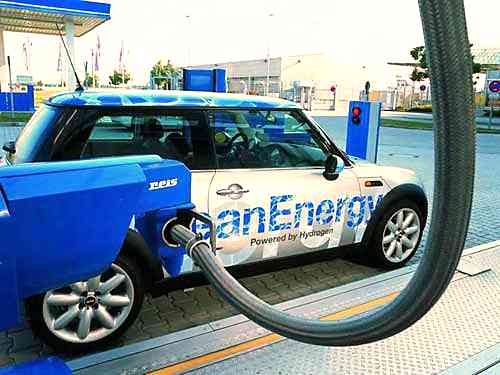
So, what this means optimally is that renewable energy will be used to produce hydrogen from water. One company doing just this is SunHydro which is building the East Coast Hydrogen Highway based upon using solar energy to split water and produce hydrogen fuel for cars.
Advantages …
Of course the pros of hydrogen fuel may seem obvious. Hydrogen is the most abundant element in the universe, including planet Earth. And using hydrogen in a fuel cell only produces a little water and heat. H2 is the ultimate clean fuel.
Now, there are several other ways to produce hydrogen fuel which need to be mentioned including from algae, artificial photosynthesis, direct solar, biomass, nuclear power and coal gasification.
Certain strains of green algae (Cyanobacteria genes) act like typical plants in that they absorb carbon dioxide and release oxygen. But several particular strains of green algae also give off hydrogen as well.
There are also certain strains of viruses that can create artificial photosynthesis and create hydrogen fuel. The MIT research team has named one such virus M13. Direct solar energy is used to stimulate the virus into producing hydrogen fuel. No electricity is needed.
Then there are other researchers who use other methods of direct solar energy to create hydrogen fuel without using viruses. One such company is Rose Street Labs in Phoenix that uses an invention called a photoelectrochemical cell (PEC) to create hydrogen directly from sunlight and water.
Biomass …
Biomass is another place in which hydrogen fuel can be harvested. Sewage plants, landfills and farms are three places that create much biomass. There are many processes to create hydrogen fuel from biomass. For instance, landfills and farms can have high concentrations of methane, ammonia or both which are hydrogen rich chemical compounds.
It must also be mentioned that hydrogen fuel can be chemically “contained” and used cleanly. Two such cases are ammonia (NH3) and hydrogen peroxide (H2O2). Both of these chemical compounds are made up mostly of hydrogen and when used as fuel zero emissions are produced.
Some people don’t like the idea of using nuclear energy to create hydrogen fuel since nuclear waste is a particularly unpopular environmental issue that needs to be dealt with. But, the plans on the table do not call for building new nuclear power plants to create hydrogen.
The scientists and researchers have mostly decided that using nuclear power plants that are currently online may be able to produce hydrogen fuel as a byproduct of the water that they are already using to cool the reactors.
Going Nuclear …
Nuclear reactors are typically cooled by water which turns into steam. There is much research being developed around the high temperature cracking of water into hydrogen and oxygen that basically uses the byproduct steam from the nuclear reactors to create this fuel.
Another unpopular method to create hydrogen fuel involves the gasification of coal. It just so happens that coal is rich in hydrogen and carbon. It has been stated that there are enough coal reserves in the U. S. to take care of our energy needs for the next 250 years.
In order to do this cleanly however is another matter. One pro of creating hydrogen fuel with this method is that it detaches us from dependency on foreign fossil fuels. This could be a near-term solution it is argued to get away from dependency on Middle Eastern countries and others like Venezuela that are not particularly friendly to U. S. interests.
In order for creating hydrogen fuel through coal gasification to work cleanly, however, the carbon that is also derived from the process needs to be sequestered someplace so that it doesn’t contribute to greenhouse gases and global warming.
Some scientists suggest sequestering the carbon inside of underground caverns, abandoned mines and inside of old oil wells that are no longer used. Some even want to pipe it miles out to sea. This notion at best could be one interim solution until clean, renewable energy sources can be developed to the point where they overtake the fossil fuel marketplace.
Going Mobile …
Hydrogen fuel can be used in both mobile fuel cells and stationary fuel cells. Mobile fuel cells would include the transportation industry such as cars, trucks and buses. Stationary fuel cells can be used in power plants, businesses, homes and even cell phones and laptop computers.
The above outline contains just some of the many ways to produce hydrogen fuel and how it can be used in everyday life. Scientists and researchers are working around the clock to come up with new and improved ways to produce H2 for cars, homes and business.
Breakthrough, disruptive technology is just around the corner for producing hydrogen fuel abundantly, cheaply and cleanly so that we all may breathe a little easier.
For more information see these blog categories:
Written by Hydro Kevin Kantola