Hydrogen Engines
Hydrogen Engines
Hydrogen engines will be replacing gasoline powered engines in automobiles. The question is when. Hydrogen engines come in two varieties, electric engines powered directly by hydrogen fuel cells and those engines that are converted from traditional gasoline powered combustion engines and powered by compressed hydrogen. In the early 2,000’s it was assumed that the natural transitional vehicle, on a consumer level, most likely will be to have a car that has a hydrogen engine that has been converted from a gasoline powered engine and is fueled by pressurized hydrogen. It was thought that hydrogen-fueled internal combustion engines (H2ICEs) as they are called will most likely hit the consumer market first. Not so, as fuel cell driven vehicles hit the market in 2014.
This “transitional” hydrogen H2ICE engine is already taking hold as both Mazda and BMW have introduced into limited production “dual-fuel” engines. With the flip of a switch, each car can switch back and forth between gasoline and hydrogen fuel. The Mazda RX-8 uses a RENESIS Hydrogen Rotary Engine, which is ideally suited to burn hydrogen without inviting the backfiring that can occur when hydrogen is burned in a traditional piston engine. Twin hydrogen injectors and a separate induction chamber help maintain safer temperatures with the hot running hydrogen fuel.
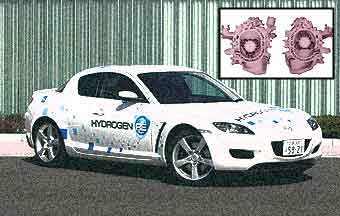 Mazda RX-8 with RENESIS Hydrogen Rotary Engine |
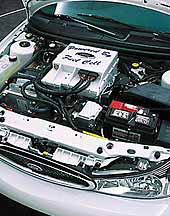 Ford Fuel Cell Engine |
The BMW H2R Record car, on the other hand has recently set 9 land records for hydrogen-powered cars with its six-litre 12-cylinder power unit developing an output of more than 210 kW or 285 bhp. The H2R is equipped with dual gasoline / hydrogen tanks, but for the purposes of the land speed records only the hydrogen tank was engaged. The difference between the standard BMW internal combustion engine and the modified engine involve the hydrogen injection valve (seat rings) and the choice of materials for the combustion chambers. The reason for the modifications is that hydrogen does not have the inherent lubricating properties that a gasoline / air mixture does.
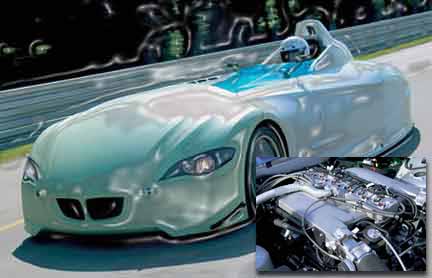
BMW H2R with Six-Litre 12-Cylinder Engine
A look a little bit further into the future has the hydrogen fuel cell cars starting to dominate the market. Fewer moving parts, less engine shimmy, cleaner burning and electricity regenerating properties will make the hydrogen fuel cell / electric engine a clear choice for many years to come. Toyota has already developed an SUV Fuel Cell Hydrogen Vehicle (FCHV as they call it) with a great design and a nifty dashboard that tells you how the fuel cell is operating.
| Toyota has also developed two high-pressure hydrogen storage tanks for use in its fuel cell vehicles. Both tanks (a 35MPa and 70MPa) have been certified by the High Pressure Gas Safety Institute of Japan.
|
 Toyota FCHV Fuel Cell and Electric Engine |
Honda has developed the FCX hydrogen fuel cell / electric vehicle as an integral way to reduce our global dependence on oil and marks a major breakthrough in fuel cell performance by delivering improved performance, range, energy efficiency and recycle-ability and even the ability to operate in sub-zero temperatures.
The FCX uses 8.3 pounds of H2 is stored in two 5000-psi (41-gallon total capacity) aluminum tanks eveloped with carbon fiber and fiberglass layers. Honda has been the only automotive manufacturer to certify its fuel cell vehicle for regular daily consumer use and the first to offer its technology to an individual customer, the Spallino family (Jon and Sandy), of Redondo Beach, California.
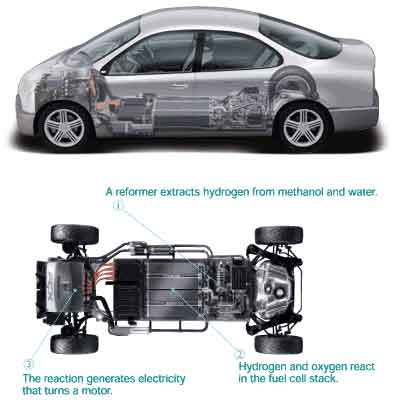
Honda FCX with Fuel Cell and Eelctric Engine
Some manufacturers such as Toyota, Hyundai and Honda have been determined to skip this transitional step so often talked about and introduce the hydrogen fuel cell / electric powered engines from the get-go. And as previously stated, as of 2014, fuel cell vehicles have hit the commercial market first.
External Links
Hydrogen Use in Internal Combustion Engines from the U. S. Department of Energy
Companies that Specialize in Coverting Internal Combustion Engines to run on Hydrogen Only:
http://americanfuelvehicles.com
http://www.hydrogenenginecenter.com/
Leave a Reply
You must be logged in to post a comment.