Home Hydrogen Fueling Stations
Imagine in the future, driving your hydrogen car into your garage and gassing it up with your very own home hydrogen fueling station. Sounds pretty out there, doesn’t it? But, as far off as it sounds, there are people right now working to make this concept a reality.
Take for instance Honda Motor Company, which has developed the Home Energy Station III that not only refuels a hydrogen car such as the Honda FCX, but it can also power a home as well. The Home Energy Station III uses natural gas and an onboard reformer to separate out the hydrogen for refueling the car. In order to create energy, it runs the hydrogen through a fuel cell and can thus generate power for a home as well.
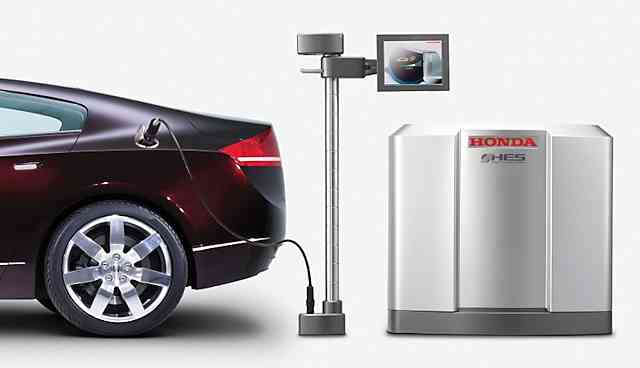
Honda Home Hydrogen Filling Station
In November 2007, Honda announced its new Home Energy Station IV that uses steam reforming of natural gas to derive hydrogen from both the steam and natural gas in equal parts. The Home Energy Station IV is 75-percent smaller than older units and provides hydrogen for a car as well as heat and electricity for the home.
The home refueling station is being tested at the Honda R&D Americas facility in Torrance, California. Honda is stating that the Home Energy Station IV will reduce CO2 emissions by 30-percent and energy costs by 50-percent compared to an average home that is on the grid and uses a gasoline-powered car.
General Motors has announced that they are developing a home hydrogen fueling station for use with their line of Equinox Fuel Cell vehicles that they will begin rolling out in limited numbers in 2007. The General Motors hydrogen generator will be able to run on either solar energy or electricity.
In 2008, British firm ITM Power announced that they were building a home hydrogen fueling station that would be available by the end of the year. This H2 refueling station uses an inexpensive plastic membrane and electrolyzes water to produce the hydrogen. Through economies of scale the price of this unit could drop as low as $4,000.
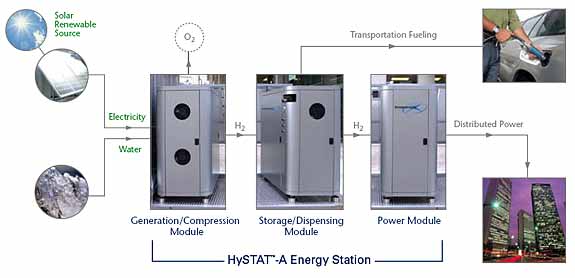 Hydrogenics HomeFueler Energy Station |
Hydrogenics (formerly Stuart Energy) also has developed a home hydrogen fueling station called the HomeFueler that is based upon the larger HyStat-A Energy Station. The HomeFueler uses electricity to electrolyze water, generating hydrogen for refueling cars. The HomeFueler may also be hooked into a wind energy or solar power for a home hydrogen fueling station based upon renewable energy resources.
Then there’s the Angel’s Nest in Taos, New Mexico built by Robert Plarr, which uses solar and wind power to electrolyze water and create hydrogen that generates power for the vast home. Excess hydrogen is also used in an Air Products Series 100 fueling station to gas up any hydrogen vehicle that may have wandered off the main roadway.
And then there’s Michael Strizki’s solar / hydrogen home in East Amwell, New Jersey that can use the excess hydrogen created by the solar panels and electrolysis to power all the hydrogen cars that may just happen to be in the neighborhood. In fact, Mr. Strizki has one such hydrogen car in his garage that he keeps for the New Jersey Department of Transportation. Both the Angel’s Nest site and Strizki’s home use Proton OnSite hydrogen generation units.
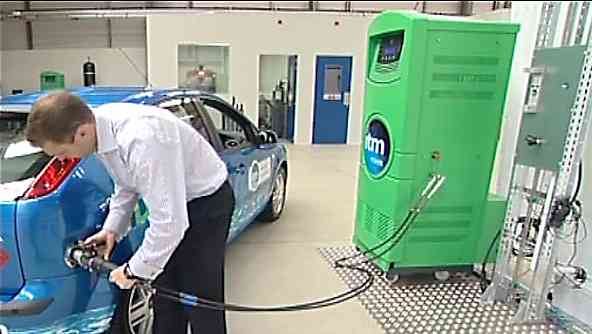
ITM Power Home Fueling Station Concept
Then there’s someone who has a hydrogen home who could use a brand new hydrogen generator (and car) to go along with it. In 2005, Bryan Beaulieu, an engineer and inventor in Scottsdale, Arizona built a $2 million, 6,000 square foot, solar / hydrogen powered dream home. If Mr. Beaulieu were inclined to attain a hydrogen car, he would most likely need a hydrogen home fueling station since Arizona currently only has two hydrogen stations statewide.
Three friends in Washington State have also built a solar-hydrogen house on their little weekend island getaway just off the coast. Stephen Friend, Jason Lerner and Charles Delahunt were tired of hauling batteries back and forth to the home so that put up solar panels, electrolyzer, PEM fuel cell and hydrogen storage tank to supply all their electrical needs.
The Chewonki Renewable Hydrogen Project is a demonstration project in Maine. The Chewonki Project has a house that 60 participants have adapted to run on hydrogen using a Avalence Hydrofiller electrolyzer and ReliOn fuel cells.
Millennium Reign Energy LCC is a home hydrogen fuel production company located in Englewood, Ohio. They offer a line of home hydrogen fueling stations from which to choose.
The hydrogen generators and home hydrogen fueling stations of the future will most likely come in three varieties including electrolysis units, reformers and chemical reaction units. The electrolysis units work by simply splitting water into hydrogen and oxygen, then compressing and storing the H2 for future use. The reformers use natural gas, methane or another hydrogen-rich gas and separate out the hydrogen for use as fuel. The chemical reaction units use boron, aluminum or other chemical substances and water to create a reaction generating hydrogen for use for fuel.
There are many companies right now claiming to have commercial hydrogen generation units available for sale. Unfortunately, leading-edge technology tends to bring out the scam artists as well. So, a word of caution to the wise is before spending any money – ask the company for references from satisfied customers so that you know they are legitimate vendors. Check the company out with the Better Business Bureau and ask the company to see a working demo of their products. A little caution will go a long way in making sure you’re on the leading edge of technology and not on the bleeding edge of technology.
As an update, in January 2010, the Honda Solar Hydrogen Station went into operation at the company’s headquarters in Torrance, California. The Honda Solar Hydrogen Station is an upgrade to the Home Energy Station IV eliminating the compressor altogether.
More Information From Our Blog
Home Hydrogen Fueling Stations
Written by Hydro Kevin Kantola