The General Motors Hy-wire hydrogen fuel cell vehicle has set the standard even among other futuristic hydrogen cars. Within its 11-inch thick skateboard chassis, the GM Hy-wire contains fuel cell (94 kw), electric motors and drive system that gives the most advanced design flexibility of any car to date.
|
The weight from the drive components is also evenly distributed providing superior handling and resisting rollover forces. |
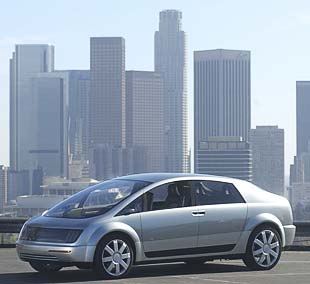 |
By simply unbolting the fiberglass chassis from the skateboard frame and unplugging a single electrical cable, with ½ hour a new chassis may be dropped on top of this hydrogen car and off you go with a new look. Not only that, because the GM Hy-wire uses by-wire technology, (meaning acceleration, braking and steering are electronic rather than hydraulic), the steering of the vehicle can move from the left side to right side and back again for use when transporting the vehicle between countries such as the U. S. and Great Britain.
Another use is for long trips, when one driver gets sleepy and wants to hand over the wheel to another more alert driver. The Hy-wire actually got its name because it’s the first vehicle that combines hydrogen and by-wire technology.
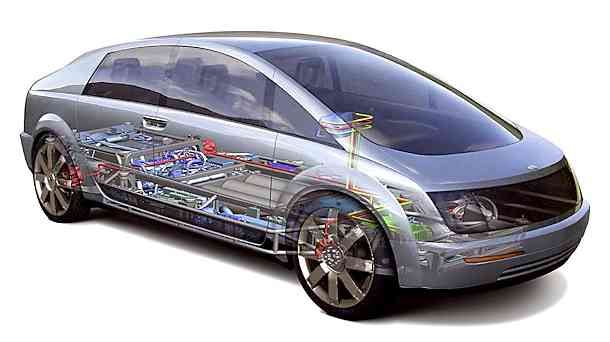
Inside the Hy-wire are no brake or acceleration pedals. All mechanisms to control the car are part of the steering wheel, similar in appearance to an airplane wheel, but in function more closely related to the handgrips on a motorcycle as the driver twists the grips to accelerate and brake the vehicle. This steering “X-drive” unit leaves open an inordinate amount of foot and legroom compared to most vehicles and seats five passengers comfortably, according to GM.
|
GM Hy-wire Video |
Instead of side view mirrors, the General Motors Hy-wire contains television monitors to check for oncoming vehicles. A television monitor is also mounted inside the steering wheel, which to some may seem redundant since the windshield has the extraordinary visibility as one might expect when peering out from a botanical gardens window since the car is without dashboard or hood.
First unveiled in 2002 at the Paris Motor Show, the GM Hy-wire has all of the features first envisioned with another General Motors hydrogen car, the AUTOnomy concept vehicle. The Hy-wire’s fuel cell stack is actually 50-percent smaller than that of the GM Sequel hydrogen concept SUV.
The front-wheel drive GM Hy-wire is rated at 82 bhp, has a top speed of 99 mph and a range of 124 miles. The car contains three 5,000 psi hydrogen tanks mounted at the rear of the skateboard chassis.
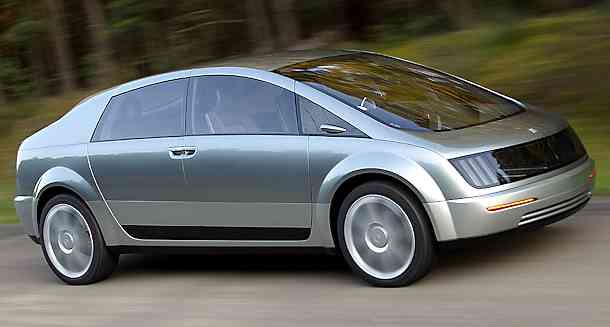
A radical departure, even from other futuristic hydrogen cars, General Motors Hy-wire has set a precedent that most will one day follow. Combining hydrogen technology with drive-by-wire technology, the Hy-wire is a sure-fire crowd favorite wherever it has been demonstrated.