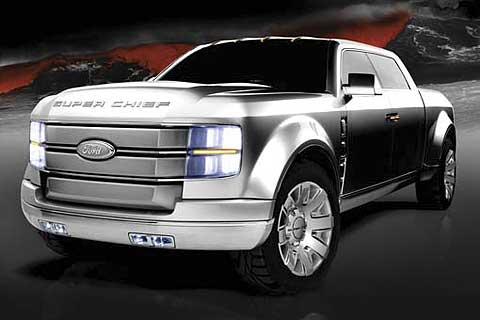
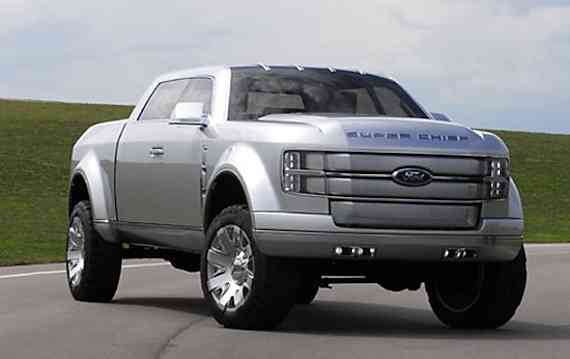
Ford F-250 Super Chief Tri-Flex Fuel Truck Since the day Henry Ford introduced the Model A, the world discovered a love affair with the open road. Until now, that open road has meant the mass consumption of fossil fuels. The Ford Company recently rolled out a prototype truck that provides a reason for a whole new generation to rejoice. The Ford F-250 Super Chief is a prototype that takes the best of nostalgic design features and blends them with the world’s first Tri-Flex capabilities that allow drivers to utilize their fuel of choice.
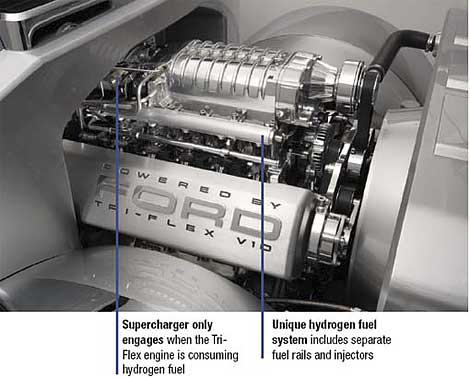
Ford designers have introduced a new supercharged v-10 engine with a tri-flex fueling system that allows users to enjoy a choice of three different fuels including gasoline, E85 ethanol or hydrogen. Because the Super Chief offers these choices drivers have the comfort of knowing they can still find fuel as the ethanol and hydrogen infrastructures are developing. In a tri-flex fueling system owners can utilize any or all of these fueling options using the same engine and only the flip of a switch. The tri-flex fueling system on the Ford F-250 Super Chief allows operators to go 500 miles between total refueling with the supercharger activated only when using the hydrogen fueling system. The hydrogen system also provides 400 lb.-ft. of torque.
The transfer between fueling options is performed through a switching system onboard and can be accomplished while the vehicle is running. The hydrogen based fuel alternative boasts 12-percent greater fuel efficiency when compared to either of the remaining fueling options. Using hydrogen also provides 99-percent less CO2 emissions than the gasoline-only option. While the tri-flex system is a new concept at Ford, the automaker has been committed to providing customers with a flex-fueling system in their F-150 models for 2005 and 2006 that allows either unleaded or E85 to be used in the same tank. The tri-flex system is a bold proclamation by Ford that hydrogen may be the next readily available fuel supply for the world and they are ready to roll with the roll out. The Ford F-250 Super Chief also offers a couple of different innovative safety features worth mentioning. The Super Chief’s Beltminder technology lets the driver know when any of the passenger seat belts are unbuckled, even in the rear seat. The Super Chief’s Blockerbeam technology is a frontal crash under ride protection system that not only protects passengers in the hydrogen truck but also protect cars in case a frontal impact occurs. The frame-rails and L-brackets help to prevent cars from sliding underneath the higher riding truck and help to disperse energy during a crash.
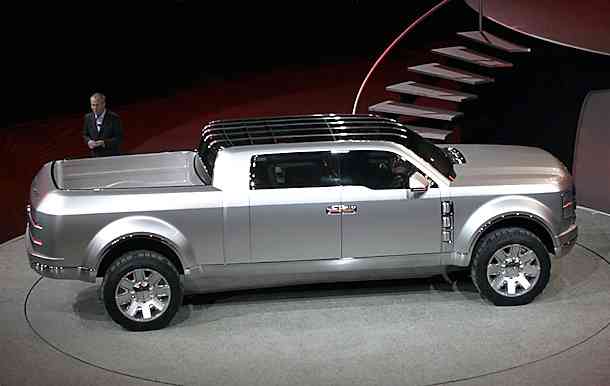
The Ford F-250 Super Chief was inspired by America’s railroad history with a front grill that is reminiscent of a locomotive, while the interior is pure luxury. The back seats come with an onboard ottoman, while rich American walnut and brown leather seats cradle driver and passenger in pronounced comfort. The roof is totally made of glass and the back doors swing out independent of the front door. The Super Chief’s front headlamps are LED’s in order to reduce power consumption.
While many are complaining about high fuel costs and world fuel supplies, automakers, like Ford, are working to find ways to minimize the world’s reliance on a depleting fuel supply. The Ford F-250 Super Chief is one bold concept that is leading the way toward energy independence and a cleaner and greener world for all.
Written by Hydro Kevin Kantola
|
5 thoughts on “Ford Super Chief Truck”
Leave a Reply
You must be logged in to post a comment.
Greetings – available when ?
Am in love with the ford super chief F-250 Tri-Flex Fuel Pickup Truck. May i know the cost range and whether it is available. It is a great piece, i just love it.
Hey Lloyd and Joseph, I know it is a travesty of justice, but sorry to say that the Ford SuperChief is a prototype and not for sale.
what supercharger are they using?
Unfortunately, they haven’t made that info publicly available.